How much does lowbed transport cost? Why one figure can't answer it
Any number you hear before the owner knows the machine and both locations is a guess, and it can change once the truck arrives and the driver sees the job. That is also why this page lists no prices: a figure from another job would mislead you more than it would help.
Knowing how the price is built helps far more. You can cut the parts in your hands and spot a quote that leaves something out.
| Cost factor | Why it matters | What to have ready |
|---|---|---|
| Distance | Fuel and driver time, plus the run to your pickup point | A map link for each location, not a town name |
| Weight | Decides which trailer and truck can carry it safely | The model, the plate figure, any attachments |
| Size | A wide or tall load needs more planning and sometimes a permit | Length, width and height in transport position |
| Loading | Machines that drive use the ramps; anything else needs a crane | Whether it starts and moves by itself |
| Access | Tight gates, sand and low cables add time or stop the trip | A photo of each entrance |
Distance: count the whole trip, not just A to B
The main figure is the road distance from pickup to drop-off. But the lowbed starts at its own yard, so the distance from there to your pickup counts too. On a long one-way run it may also come back empty. Some owners build that into the price and some don't, so ask.
A town name isn't enough. A workshop in the industrial area and a farm at the end of a long sand track are very different trips, even if both are around Buraidah.
People often ask for a rate per kilometre. It tells you little, because a short trip has the same loading, chaining and unloading as a long one. Compare the price for the whole job.
Weight and size: give real numbers
Weight decides which trailer and truck can take the load. Shaving it to get a better price backfires: the wrong trailer turns up and the trip is wasted, or an overloaded rig goes out on a public road.
The weight is on the machine's data plate, in the manufacturer's manual, or with the dealer. The number in the model name often isn't it. Count what's bolted on, since a large bucket or hydraulic breaker adds weight and length, and clean dried mud off the tracks before it falls on the road.
Measure in transport position: excavator arm folded, height taken at the highest point. An unusually wide, long or tall load may need a permit from the authorities, which affects timing and cost. We don't print limit figures here, because a wrong number on this one is expensive. Ask the Transport General Authority which rules apply, and share your measurements before you agree a price.
Loading and unloading: where two quotes split
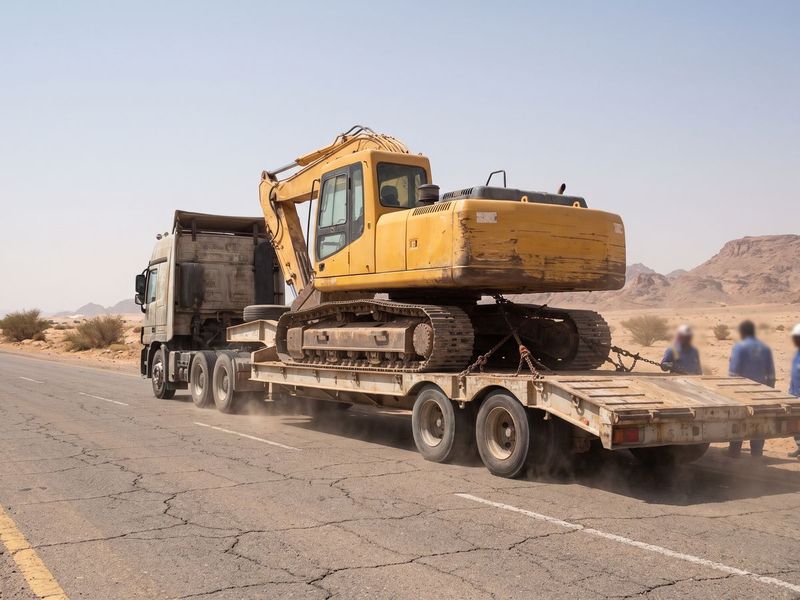
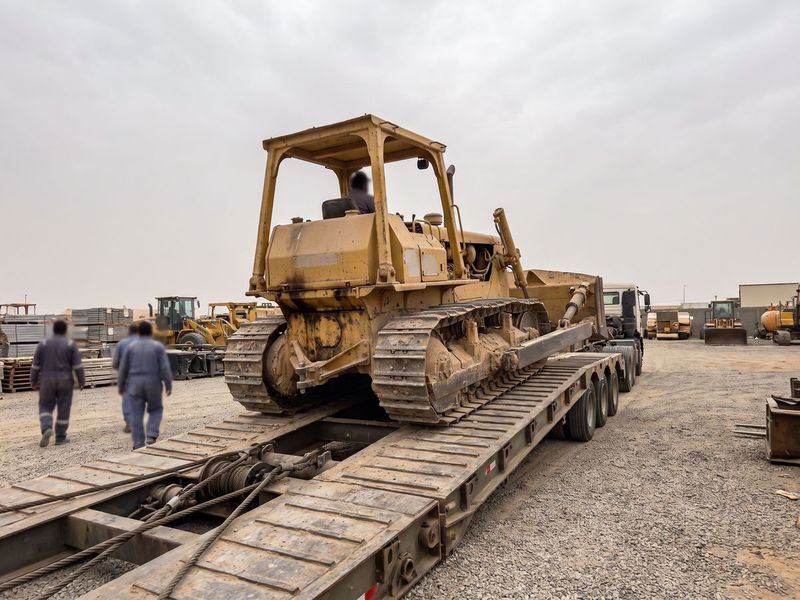
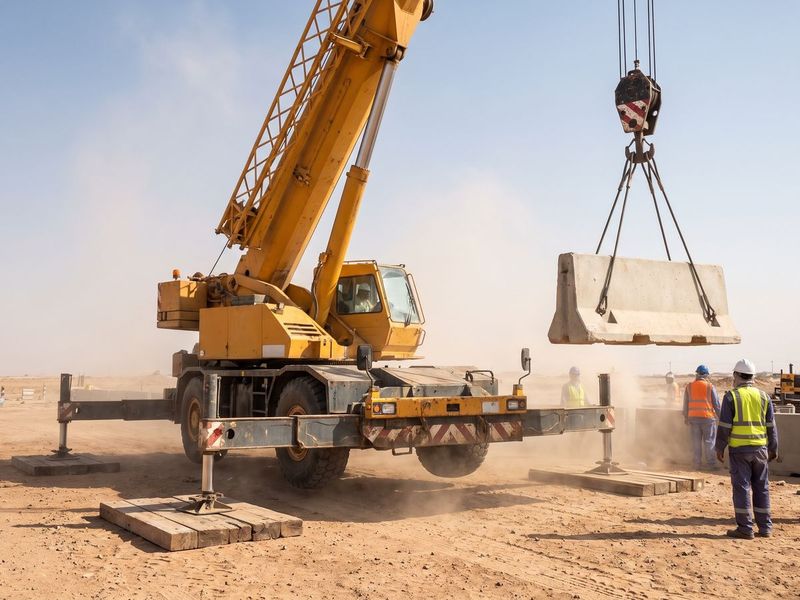
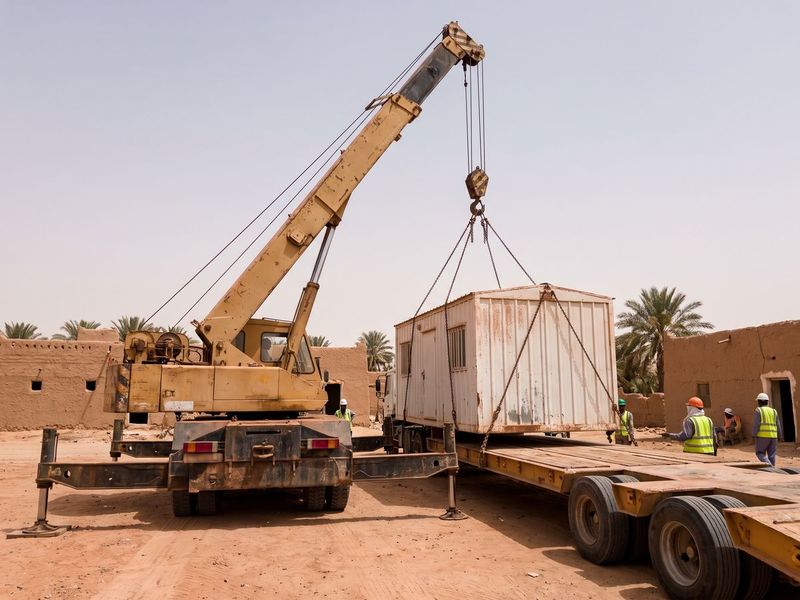
The same road trip can carry two very different prices, usually because of how the load gets on the trailer. Excavators, wheel loaders and dozers drive up the ramps. Factory machines, generators, containers and cabins need a crane at each end.
A crane's size and hours then go into the sum; our crane hire cost guide covers that part. Our lowbed transport comes with our own cranes, so it's one booking and one appointment, with nobody waiting on a second contractor.
Find your load here:
| Load | How it gets on | What to plan for |
|---|---|---|
| Working excavator or loader | Drives up the ramps | Agree who drives it on, and keep people clear while it climbs |
| Broken-down machine | By crane | Say so in your first message, or the lowbed arrives without one and the trip is wasted |
| Factory machine or generator | Crane at both ends | Your technicians disconnect it before the day |
| Cabin or prefab room | Crane at both ends | Empty, disconnected, with a level base waiting |
Access: what the map won't show
The surprises tend to come in the last kilometre, not on the highway. A loaded lowbed is long, heavy and low to the ground, so look at both sites as its driver would. A photo of each entrance catches most of this.
- A narrow gate or tight corner: the rig needs room to get in and back out.
- Sand or freshly backfilled ground: all that weight is on the tyres and it can sink.
- A raised threshold or speed hump at a farm gate: the low deck can ground on it.
- Power lines or branches over the track: the machine stands tall on the deck, and touching a live cable can kill. Don't judge the gap by eye. Tell the owner at the start, and ask the Saudi Electricity Company about any low line.
- A bridge or underpass on the route: the loaded height decides whether it fits, so mention it.
How to bring the cost of moving heavy equipment down
- Check you need a lowbed at all. A light or medium load may fit a flatbed; here is how lowbeds and flatbeds differ.
- Be ready before the truck comes: the machine starts, its operator is on site, the path to it is clear, and the drop-off spot is prepared.
- Say if your date is flexible. We group nearby jobs into one day to cut the travel charge, and flexibility makes that possible.
- Two small machines? Ask if one trip can take both. It depends on their combined weight and length.
Comparing quotes: what to ask before you agree
The lower quote isn't always the lower bill, because one may include the crane and another not. Ask each owner the same questions and keep the answers in writing. WhatsApp is fine.
- Is this the price for the whole job, or only the road trip?
- Is a crane included at pickup and at drop-off?
- Is the trailer's return trip counted?
- If the truck arrives and the site isn't ready, how is waiting charged?
- If the load needs a permit, who arranges it and who pays?
- Who secures the load, and with what? It should be chained and tensioned before it moves.
- If something is damaged on the road or during loading, who is responsible?
- Does the price include VAT?
What to send on WhatsApp for a clear price
Our lowbeds run with their drivers from our yard in Al Ihtifalat, Ar Rass. We cover all of Qassim and take loads to other cities on request. We price by distance, the load's weight and size and any crane it needs, and you get a clear price before we start.
A message like this is enough: "Hello, I have a working excavator, photo of its plate attached. I need it moved from this location to this one. The track to the second site is sandy. Any day next week suits me."
Send us this in one message:
- What the load is: the machine type and model, or what you're moving.
- Its approximate weight, and any attachments on it.
- Length, width and height in transport position, if you can measure them.
- Whether it moves by itself or needs a crane to load and unload.
- A map link for pickup and another for drop-off.
- Photos of the load, and one of each entrance.
- The date you want, and whether it can move.