1. The crane capacity you need
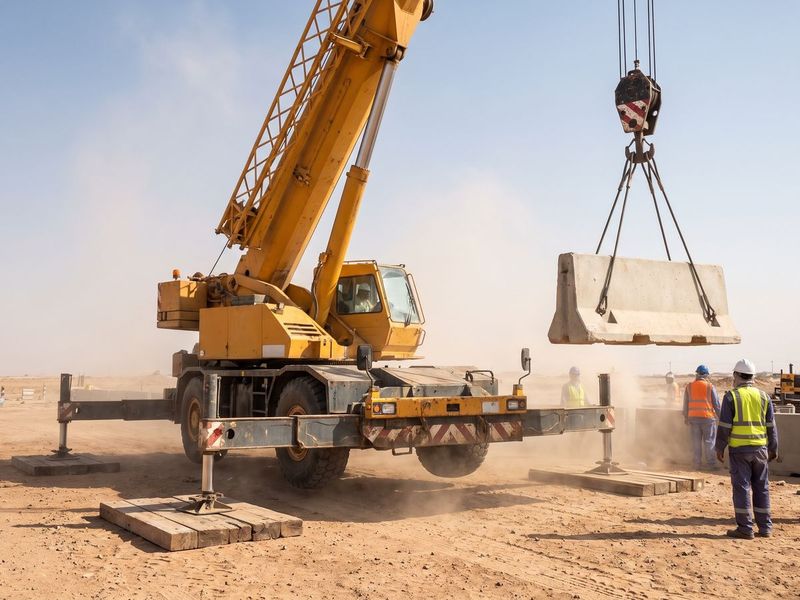
A bigger crane costs more to run, move and maintain, so capacity drives the price. Capacity depends on more than the weight of the load: it also depends on the horizontal distance between the crane and the drop point. That is why a light load sometimes needs a bigger crane than you expect.
2. How long the job takes
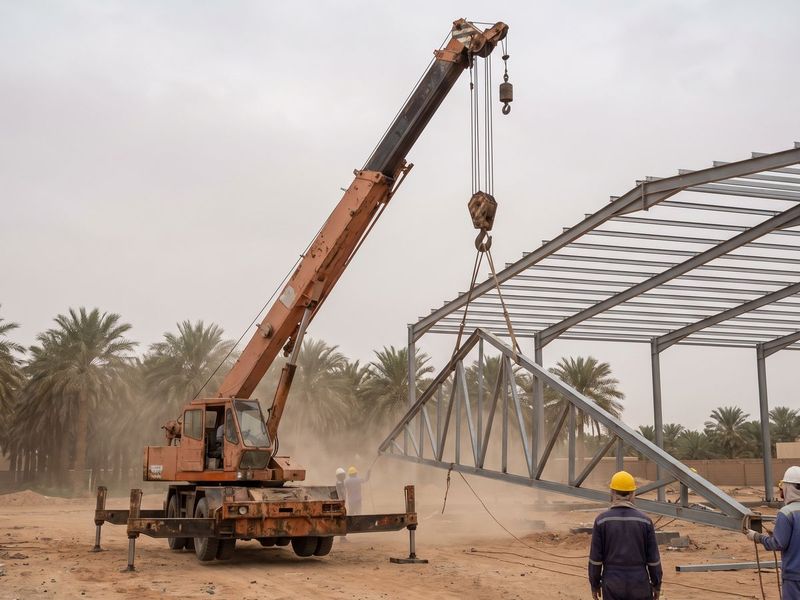
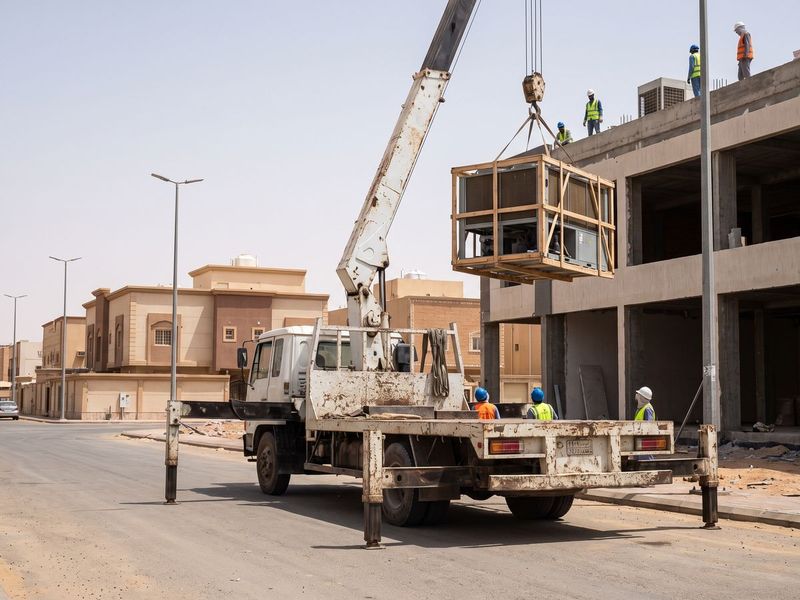
Cranes are hired by the hour, by the day or per job at a fixed price. Short jobs such as lifting a tank or an AC unit usually have a minimum number of hours, while long jobs such as erecting a hangar are often cheaper by the day or per job.
3. Distance to your site
The crane travels from its base to your site and back, so distance is part of the price. A job inside town is different from one on a remote farm or in another governorate. Send your exact location or a map link so the quote is accurate.
4. Site difficulty
A tight site, soft sand that needs pads under the outriggers, overhead power lines or a lift over a tall building all add set-up time and sometimes need a bigger crane. Two photos of the site save everyone a lot of time.
5. Operator and extra equipment
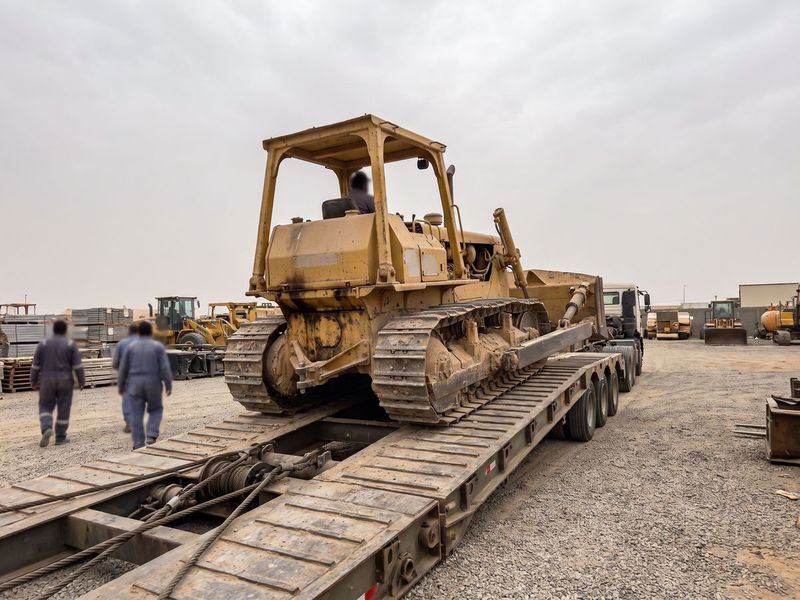
Cranes are normally hired with a trained operator, which is a core part of the price and of safety. Special rigging, an extra banksman, or moving the load afterwards on a lowbed are added to the quote.
How to get an exact quote in one message
Send this in one WhatsApp message and you will get a clear price quickly:
- What you want lifted and its approximate weight (or its type and size).
- From where to where: the height or distance from where the crane can stand.
- Your location as a map link.
- Photos of the site and the load.
- When you need it.