Erecting a hangar with a crane: the usual order
Every hangar comes with erection drawings from the manufacturer or supplier, and the crew works from those. Still, most farm hangars and warehouses built on steel portal frames go up in roughly this order, and knowing it tells you what has to be ready before each stage:
| Stage | What the crane does | What must be ready |
|---|---|---|
| Bases and anchor bolts | Nothing yet. This is finished before it arrives | Concrete ready to take load, and bolts in place and matching the drawing |
| Columns | Stands each column on its base and holds it until the nuts are tightened | Nuts, washers and tools at every base |
| First bay | Sets the columns and rafters of the first two frames and holds them until the bracing between them is fixed | That bay's bracing and purlins sorted and set aside |
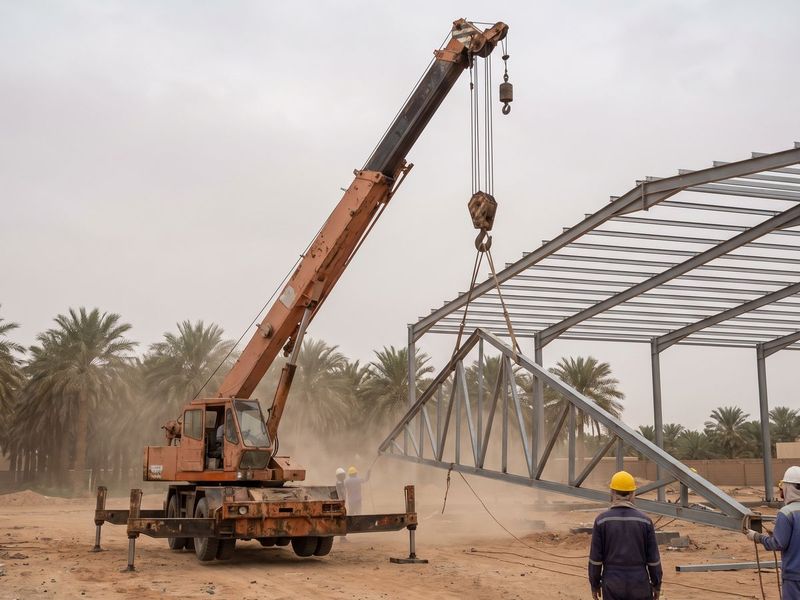
| Rafters or trusses | Lifts each rafter once it's assembled on the ground, whole or in two halves | Level ground to assemble on, tag lines, and a safe way for the crew to reach the connection |
| Remaining frames | The same again, frame after frame, moving position when it has to | Steel laid out in erection order, and a clear path for the crane |
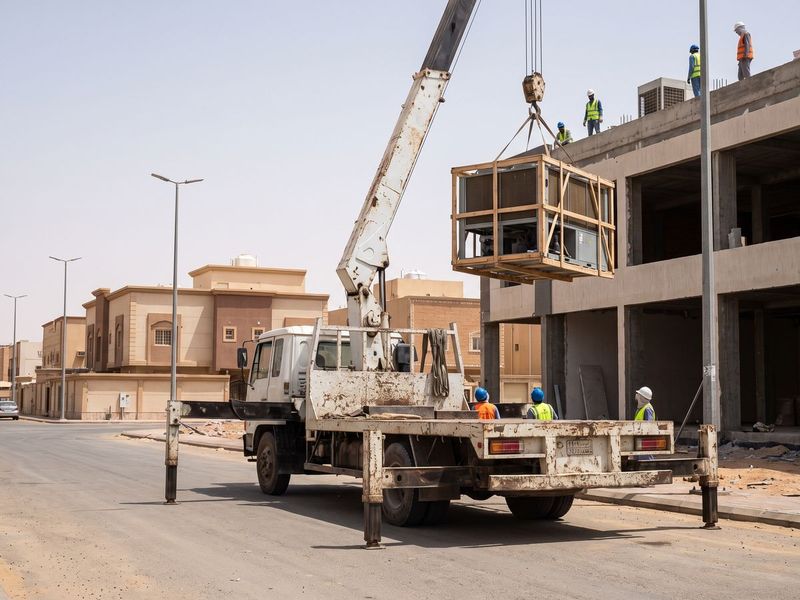
| Purlins and bracing | Lifts the bundles up to the roof and lands them where they go | Bundles numbered, with everyone knowing where each one goes |
| Roof and wall panels | Lifts the sandwich panel bundles up | Calm air, and bundles strapped tight |
Why the first bay matters most
A column standing on its anchor bolts isn't as stable as it looks, and a single frame can lean until something ties it to the next one. That's why crews put up the first two frames and fix the bracing and purlins between them before anything else. Once that bay is rigid, the rest of the hangar is built off it.
The crane holds each piece until the crew says it's fixed, and not a moment before. Nobody should push the operator to release the hook early to get to the next piece. A piece that falls doesn't go back up in minutes, and it can fall on someone.
What to have ready before the crane arrives
On a hangar the crane works at the crew's pace, and anything missing on the ground stops it while you're paying for it. Go through this list before the day:
- Bases: the concrete has to be ready to take the load. When it's ready is for the engineer or the contractor who poured it to say, not a guess.
- Anchor bolts: check their spacing and height against the drawing before crane day. One bent or short bolt stops work while the crane waits.
- Steel: stacked on timber on level ground rather than dropped in the sand, every piece clearly numbered, with the first pieces to go up on top, not underneath.
- Packing list: the supplier gives you a list with the weight of every piece. Keep it to hand, and send us the weight and length of the heaviest one.
- Bolts and tools: complete and sorted by where they go. One missing box of bolts means a crane standing idle.
- Working at height: the crew needs a safe way to reach each connection while wearing a harness that is clipped on. Agree it with them in advance. Nobody rides a load or hangs from the hook, ever.
- Tag lines: for long columns and rafters, so the crew steers the piece from a distance instead of reaching for it by hand underneath.
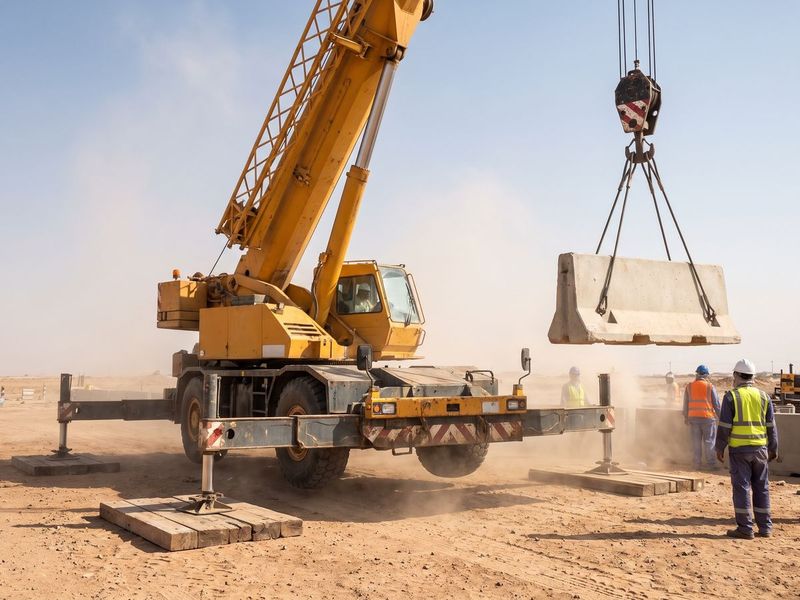
- The crane's spot: clear of cars and materials, firm and level, and away from pits, septic tanks and freshly filled ground.
Where the crane stands, and why every move costs time
The crane sets up where it can reach the most fixing points. A long hangar usually can't be done from one spot, and every move means folding the outriggers, driving and setting up again before the next lift. Plan the positions with your erection crew beforehand so it moves as few times as possible.
Keep the steel within the crane's reach, but not under the path the load swings through. If the crane will work from inside the hangar before it's closed in, agree from the start how it gets out before the last frame goes up or the end wall is clad.
What size crane a hangar needs
Three things decide it: the weight of the heaviest piece, the horizontal distance from where the crane stands to the furthest fixing point, and the height the piece has to reach. The further a crane reaches, the less it can lift, and the crane's own load chart sets that, not the number in its name. The guide to choosing the right crane size explains how.
One thing people often miss: if the crew assembles a rafter on the ground and lifts it in one piece, the weight that counts is the whole rafter with its splice plates, not each half. So the heaviest piece in a hangar isn't always a column; it's often an assembled rafter. Add it up from the packing list, or send us the list and we'll work it out with you.
How many crane days to plan for a hangar
There's no single figure for every hangar, because the crane works at the erection crew's pace. You can still work it out rather than guess:
- Count the frames on the drawing, and the bundles of purlins and panels.
- Ask the crew how many frames they can set in a day with the crane beside them.
- Divide the number of frames by their answer. That's roughly your days for the frame.
- Panels are a separate stage. Ask the crew when they want them up and how many bundles, because that can be days after the frame.
- Once the frame is up, the crew needs time to plumb it and tighten the bolts, and that usually doesn't need a crane.
- Book the crane for the lifting days only, and let the plumbing and bolting happen in between. Whether a day rate or an hourly rate suits you better is worked through in hourly vs daily crane hire.
Farm hangars: what to check on site
A farm isn't an industrial yard, and the things that stop a crane there are well known. Photograph them for us before the day. The rest of the groundwork is in preparing your site for a crane:
- Sand tracks: a crane is heavy, and soft sand or freshly irrigated ground can swallow a wheel. Photograph the track from the gate to the hangar.
- Irrigation lines and buried pipes: outriggers press hard on the ground, so tell us where they run before the crane's spot is chosen.
- Palms and trees: a long rafter needs room to swing without hitting anything.
- Power lines: many farms have a line running across them, and a long rafter, the rigging or the boom can all get close to it. Touching one, or getting too near, can kill. Don't judge the gap by eye. Mention it in your first message, contact the Saudi Electricity Company before the lift, and expect the operator to refuse a lift that isn't safe.
- Backfill around the bases: freshly filled ground is soft and won't carry an outrigger.
Wind and long, light pieces
Long rafters and bundles of sandwich panels are light for their size, and wind catches them like a sail and turns them on the hook. That's why the operator stops lifting when the wind goes beyond what the crane's manual allows, even with work left to do. It isn't a delay. It's what keeps the crew and the building safe.
If you can, schedule the panel lifts for a calmer part of the day, and agree beforehand how time is charged if wind stops the work. While a piece is in the air, nobody stands under it or in its path, and it's steered with a tag line from a distance.
Who does what: the crane and the erection crew
In hangar and steel structure lifting, our part is the crane and its operator: lifting each piece and holding it until it's fixed. Assembling, bolting and aligning the hangar is the erection crew's job, and they set the order and the connections from the drawing.
Agree on one person from the crew to give the operator signals. When several people wave at once, each meaning something different, the operator stops and the time goes. And if the steel arrives on the supplier's truck, tell us when: the crane can unload it and the crew can stack it in erection order from the start, instead of it landing in a heap you have to sort through later.
What to send us on WhatsApp before erecting a hangar with a crane
Our cranes go out with their operators from our yard in Al Ihtifalat, Ar Rass, and we cover every city in Qassim, Al Badaye, Buraidah and Unaizah included. You can hire by the hour, by the day or at a price for the whole job, and you get a clear price before we start.
A message like this is enough: "Hi, I have a farm hangar, this long, this wide and this high, with this many frames. The heaviest piece is a rafter weighing this much, from the packing list. The bases are ready and the crew is ready from this date. Here's the location and a photo of where the crane would stand."
Send us, in one message:
- The hangar's length, width and height, and the number of frames.
- The weight and length of the heaviest piece from the packing list, and whether rafters are assembled on the ground before lifting.
- Whether there are sandwich panels for the roof or walls, and when they go on.
- A map link to the site, with photos of the track and the crane's spot.
- Any power lines, palms or pipes nearby.
- When the erection crew will be ready, and how many days they expect.