The tonnage is the maximum at the closest radius
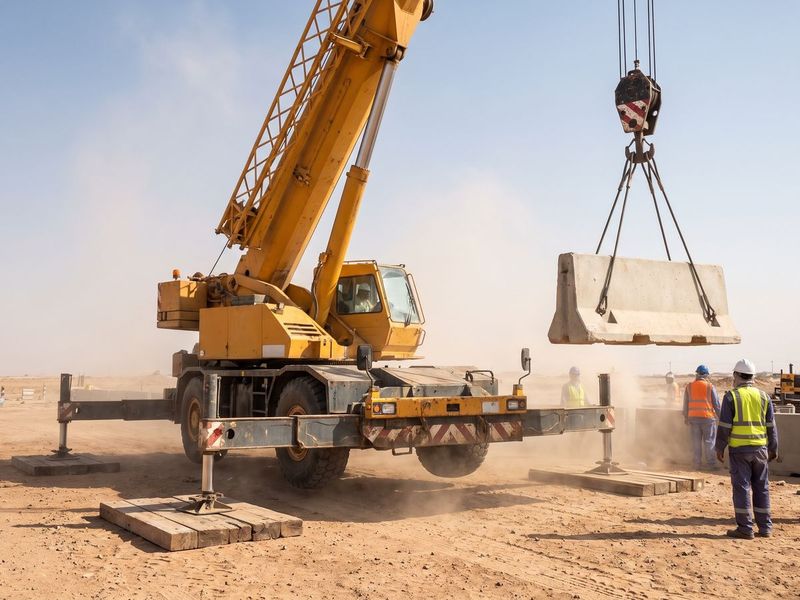
A 25-ton crane lifts that weight only when the load is very close and the boom is short. The further the load is horizontally (the radius) and the longer the boom, the lower the allowed load. At 20 to 25 metres it may lift only a small part of its rating.
Three facts decide the right crane
- The load weight, plus the rigging (chains, slings and hook block).
- The lifting radius: the horizontal distance from the crane's centre to the furthest point the load must reach.
- The height: how high the load must go above the ground or the building.
The load chart is the reference
Every crane has a manufacturer's load chart showing the allowed load for each boom length and radius. A professional operator picks the crane and where it stands from this chart, with a safety margin, and never works at the limit.
Typical weights
Rough figures to help you estimate; real weights vary by type and size:
- An empty water tank: from tens of kilos to a few hundred, by size and material. Always lift it empty.
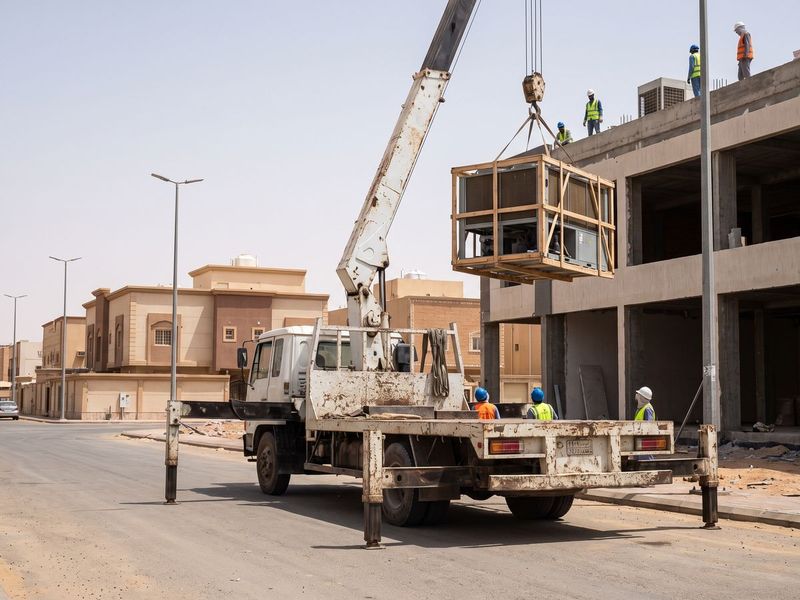
- A package AC unit: from a few hundred kilos to over a ton.
- A caravan or portable cabin: several tons, by length and finish.
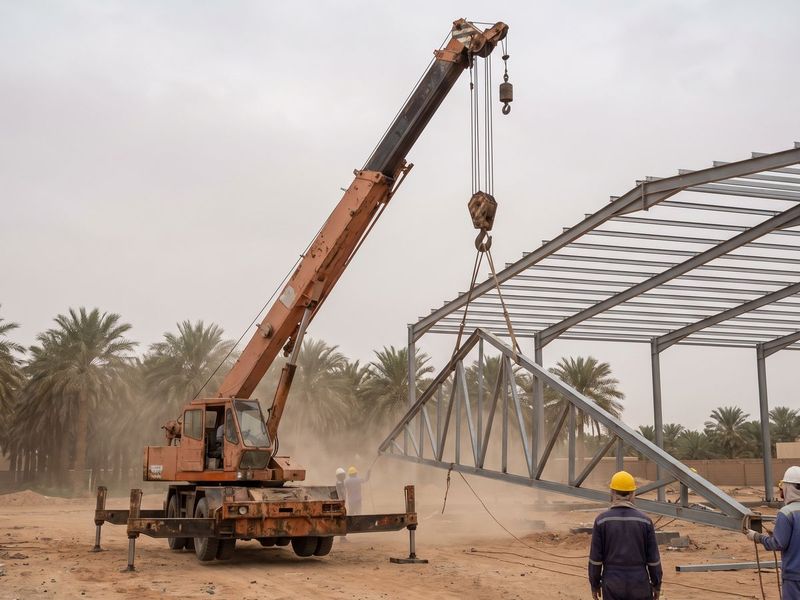
- A steel truss or column: by size; the weight is usually on the fabricator's drawings.
The easy way: send photos and we work it out
You don't have to calculate anything. Photograph the site and the load, mark where it must go, and send it. The owner estimates the distance and weight and suggests a crane that lifts safely, without paying for a bigger crane than you need.